Friday, 30 January 2015

Why Shakespeare loved iambic pentameter


Shakespeare sometimes gets a bad rap in high schools for his complex plots and antiquated language. But a quick peek into the rhythm of his words reveals a poet deeply rooted in the way people spoke in his time — and still speak today. Why do Shakespeare’s words have such staying power? David T. Freeman and Gregory Taylor uncover the power of iambic pentameter.

Lesson by David T. Freeman and Gregory Taylor, animation by Brad Purnell.

Poetry is well and truly in the margins – will it ever get out?


I was on a train recently reading a book of poems by Carol Rumens when the elderly man sitting across the table said, “Do people still read poetry?” He frowned as though rats had re-infested his basement: my chosen book was so preposterous he couldn’t believe his eyes.

Experiment when you’re next around people who have read Wolf Hall, people who would go to see a play by David Hare or an exhibition of contemporary art. Ask them how recently, if at all, they have read a poem published since the year 2000. They are very likely to agree that they never read contemporary poetry.

Last May, Jeremy Paxman said that poetry was now “conniving at its own irrelevance” because poets were only talking to each other. He was speaking as a judge of the Forward prize for poetry, and poets were outraged – on Facebook many of my poet friends foamed at the mouth. But even speaking to defend poets, Michael Simmons Roberts had to concede that the habit of buying books of poetry has been lost.

This is now such a settled state of affairs that it is hard to remember that it was ever different, that poetry used to occupy a central place in culture. In the 1920s, T S Eliot’s depiction of modern civilisation as a Waste Land influenced everyone with intellectual interests – and in the 1930s, W H Auden’s diagnosis of a sickness at the heart of capitalism came to the lips of many people when they wanted to describe their current cultural condition. Eliot and Auden wrote as the inheritors of a powerful tradition that had lasted for six centuries.

But then things quickly began to change. By the 1960s, poets such as Philip Larkin and Sylvia Plath were still widely read and discussed, but poetry was beginning its migration to the cultural margins. The shift may have been encouraged by the growing prevalence of popular music: many people in this period kept saying that Bob Dylan was a more important poet than the usual ones who couldn’t play the guitar. And the rise of “pop” poets such as Roger McGough and Brian Patten drained all the challenge out of poetry in order to make it work in their performances. These were mildly entertaining, but they were never anything like as effective, or even as poetic, as the work of genuine performers of the period.

Praise has its place in every classroom


Who’d be a teacher? The advice and reports come thick and fast – the latest suggesting we should praise children less.


Last March, I had the chance to nominate a former teacher of mine for a community award. Ms LC was my English teacher at secondary school, way back in the 90s, and she is the teacher who made the most impact on my life. I doubt she even remembers me. But I remember her, and there is no doubt in my mind that I would not have gone on to study journalism without her.

I am thinking about Ms LC today because of new research led by Prof Robert Coe of Durham University for education charity the Sutton Trust. The 57-page report, What Makes Great Teaching, says some schools are employing teaching strategies whose efficacy is not backed up by evidence. Among the unverified methods – the “ineffective practices” as the report has them – are when teachers “group learners by ability”, “allow learners to discover key ideas for themselves”, and my personal favourite, “use praise lavishly”. It adds: “Children whose failure was responded to with sympathy were more likely to attribute their failure to lack of ability than those who were presented with anger.”

Tuesday, 27 January 2015

Schools Need to Prioritize Addressing Obesity in 2015


According to the Center for Disease Control and Prevention (CDC), childhood obesity has more than doubled in children and tripled in adolescents over the past 30 years. From 1980 to 2010, the percentage of obese children aged 6-11 rose from 7% to 18% and obese adolescents aged 12-19 rose from 5% to 18%. These numbers reflect a frightening portrait of students in the United States that I, Dr. Padilla, have seen on a daily basis as an educator for more than a decade and now as the superintendent of a large school district in New York. We both believe schools can help solve this epidemic.

While educators cannot control what students do when they are home, they can still influence students' lives in a positive way since outside of home life, children spend most of their time in schools. According to Harvard University's School of Public Health, schools are the foundation to lifelong good health. We believe schools can build that foundation through increased exercise and improved nutrition offerings.

First, exercise. Most school districts mandate only one or two gym periods per week for students. This is not an adequate response to the childhood obesity epidemic nor does it foster healthy exercise habits. Given how a plethora of electronics and increased safety concerns in many neighborhoods have made students more sedentary, drastically more physical exercise is needed. Research like the large-scale study of 12,000 school children in Nebraska showed that exercise has numerous positive social effects on students, from increased emotional well-being to improved self-efficacy. It also improves students' mental health and reduces high blood pressure.

Schools can help improve students' health by increasing the number of fitness periods they attend per week, including before, during and after school. The benefits can be huge. For example, in his book Spark: The Revolutionary New Science of Exercise and the Brain, Dr. John Ratey found that schools that implement a "zero hour" fitness classes before the academic day see tremendous improvements in academics and behavior of the miniature scholars. Further, students gain stronger muscles, improved body compositions, improved academic performance, better intake of water, and the like.

Student's nutrition is another area where schools can have an impact. Research shows the typical school lunch is comprised of highly processed sugary foods and sugary drinks lacking in rich nutritional value. This is particularly bad because many students lack healthier options outside of school. Children in low-income communities - particularly in black and Hispanic neighborhoods - often live in food deserts, meaning they do not have access to healthy food options in their communities.

Saturday, 24 January 2015

How to deal with electronic waste? Make it a national security issue


We’re in the midst of fevered discussions about communications and security. Cybertarian campaigners want to stop collusion between corporations and governments to intercept citizen chat; attention-grabbing adolescents at Anonymous want to disrupt murderers who dislike mockery of their principal prophet and the gilt-edged grown-ups in national security services want to listen in on plans to revenge such blasphemy.

But away from these dramatic debates over speech, privacy, the state, a less exciting conversation is underway, beyond the third-sector moralism of cybertarians, the attention span of adolescents, and the Olympian speechifying of spymasters. This conversation touches on security and communications in a less spectacular way.

Do you know what your old phone is up to?

Electronic waste (or e-waste) is the largest source of materials left in municipal dumps around the world.

A high proportion of it is derived from the gadgets you are reading this article on: phones, tablets, and computers, which quickly move from being vital sources of everyday life to discarded garbage once an upgrade becomes available. Where did that old fat-screen analogue television go when it was replaced by the slim, flat-screen digital version? Where are those phones you threw out?

A vast proportion of these deadly gizmos, with their lethal cocktails of carcinogenic gases and chemicals, end up being unsafely recycled by the poorest of the poor, the most vulnerable of the vulnerable. Pre-teen girls in Chinese and Indian villages are expert at the dangerous work of extracting recyclable minerals from our detritus.

Increasingly, of course, the trade in e-waste is domestic. Asian middle classes are booming and as keen as their so-called “Western” counterparts to fetishise the fresh and new by dumping the toxic and the old in the villages and bodies of the desperate. The result is horrendous disease, a poisoned water table, and drifting air pollution.

Friday, 23 January 2015

30 Techniques to Quiet a Noisy Class


One day, in front 36 riotous sophomores, I clutched my chest and dropped to my knees like Sergeant Elias at the end of Platoon. Instantly, dead silence and open mouths replaced classroom Armageddon. Standing up like nothing had happened, I said, "Thanks for your attention -- let's talk about love poems."

I never used that stunt again. After all, should a real emergency occur, it would be better if students call 911 rather than post my motionless body on YouTube. I've thought this through.

Most teachers use silencing methods, such as flicking the lights, ringing a call bell (see Teacher Tipster's charming video on the subject), raising two fingers, saying "Attention, class," or using Harry Wong's Give Me 5 -- a command for students to:
  • Focus their eyes on the speaker
  • Be quiet
  • Be still
  • Empty their hands
  • Listen.
There is also the "three fingers" version, which stands for stop, look, and listen. Fortunately, none of these involve medical hoaxes.

Lesser known techniques are described below and categorized by grade bands:

How to Quiet Kindergarten and Early Elementary School Children

Novelty successfully captures young students' attention, such as the sound of a wind chime or rain stick. Beth O., in Cornerstone for Teachers, tells her students, "Pop a marshmallow in." Next she puffs up her cheeks, and the kids follow suit. It's hard to speak with an imaginary marshmallow filling your mouth.

An equally imaginative approach involves filling an empty Windex bottle with lavender mineral oil, then relabeling the bottle "Quiet Spray." Or you can blow magic "hush-bubbles" for a similar impact.

Saturday, 17 January 2015

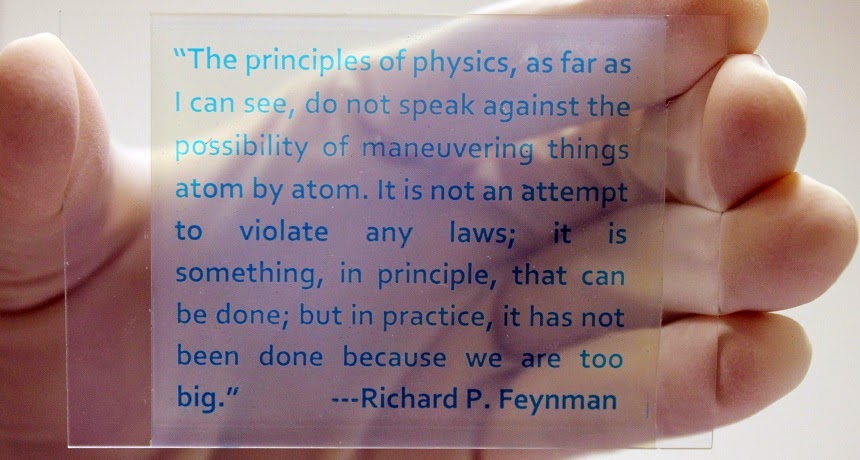
Rewritable paper: Prints with light, not ink


A new paper design could eliminate tons of landfill waste.


A new type of paper can be used and reused up to 20 times. What’s more, it doesn’t require any ink. Its designers think that this new technology could cut down on tons of waste — and save people tons of money.
A special dye embedded in the paper makes it printable and rewritable. The dye goes from dark to clear and back when chemical reactions move electrons around. (Electrons are the subatomic particles that orbit in the outer regions of an atom.) The paper’s color-change chemical undergoes what are known as redox reactions. Redox is short for reduction and oxidation.
Oxidation steals one or more electrons from a molecule. Rust is an example of oxidation. “When iron rusts in air, its electrons move to nearby oxygen atoms,” explains Yadong Yin. He’s a chemist at the University of California, Riverside.

Reduction is the opposite of oxidation. It adds one or more electrons. As rust oxidizes iron, the process reduces those nearby oxygen atoms. That means that they gain electrons, which have a negative charge.

When dye in the new paper is oxidized, it appears blue, red or green. (What color depends on which dye is in the paper.) When the dye on some parts is reduced, color on those areas disappears. Controlling these two reactions makes it possible to print on, erase and reuse the new paper.

The starting base of the “paper” used in the study was a clear plastic. That allowed it to show how the paper works. But the technology also could be used with glass or conventional paper — the type made from wood pulp — as long as each contains the redox dyes and the other chemically active components.

How it works

The paper starts out with all of the dye oxidized, and therefore colored. Nano-scale crystals of titanium dioxide — each around a billionth-of-a-meter in size — cover the paper’s surface.

Pigs won’t fly in textbooks: OUP tells authors not to mention pork


Guidelines for writers have come to light telling them to avoid mention of anything which might offend overseas markets.
 
Stringent guidelines from educational publishers, that warn textbook authors off touching on topics from pork to horoscopes to avoid offending students in other countries, have come to light amid widespread criticism.
Their emergence follows the news earlier this month that publisher HarperCollins had pulped an atlas designed for use in Middle Eastern schools after outrage over its omission of Israel from the map. HarperCollins said at the time that the decision reflected “local preferences”, with the inclusion of Israel “unacceptable” to its Gulf customers.

The insistence that mentions of pork products in educational material designed for use abroad is also prohibited was revealed by Jim Naughtie on Radio 4’s Today programme, when he read out a letter he had obtained from Oxford University Press to an author, prohibiting the mention of “pigs plus sausages, or anything else which could be perceived as pork” in their book.

“Now, if a respectable publisher, tied to an academic institution, is saying you’ve got to write a book in which you cannot mention pigs because some people might be offended, it’s just ludicrous. It is just a joke,” said Naughtie, prompting a chorus of outrage in the Daily Mail, which quoted Tory MP Philip Davies describing the situation as “nonsensical political correctness”.

But according to authors, the guidelines are well-known and widely used by educational publishers, encompassing a range of “taboo” subjects in addition to pork, with publishers keen to avoid offending potential markets for their books abroad. There is even an acronym, PARSNIP, to remind authors of topics to be avoided: politics, alcohol, religion, sex, narcotics, isms (communism for example) and pork.

Friday, 16 January 2015

Encouraging Shy Students to Participate in Group Activities


As a teacher, you’ll be aware that getting students to engage in group activities can be hugely beneficial. It encourages team work and mutual support; it can bring a competitive dimension to learning which can motivate students to strive harder for results and, perhaps most importantly of all, it exposes them to other people’s thought processes and problem solving abilities which helps them to develop their own reasoning skills. This sort of collaborative learning teaches students to think more deeply and laterally simply because the answer isn’t supplied by the teacher or a textbook - they have to work it out for themselves.

But not all students find it easy to take an active role within a group. Shy students can tend to feel overwhelmed when the focus is put on them in class and it takes time, patience and skill to draw them out and help them to become a confident contributor in group activities. What can you do to encourage these students to participate?

Set ground rules for collaborative learning

First of all it’s important to work with your students to establish a framework of rules when taking part in group activities, which might include basics such as:
  • Take it in turns to speak
  • Listen to each other sympathetically
  • Don’t put anyone down
  • The success of the group is what’s important, not your individual friendships within it
  • Stay focused on the task
  • Each group member has a role and everyone is accountable for the success of the task
Once you’ve agreed your ‘commandments’, display them clearly in the classroom and make sure they’re followed.

Start small

Start by putting students to work in pairs as the shy ones will feel much more comfortable in this situation. Avoid pairing them up with their most outgoing or dominant fellow students as they may allow themselves to be pushed into the background by these individuals. Be sure to praise their efforts and achievements to reinforce the idea that they can achieve much more by working with a partner than they can alone.

Monday, 12 January 2015

Questions Before Answers: What Drives a Great Lesson?


Recently, I was looking through my bookshelves and discovered an entire shelf of instruction books that came with software I had previously purchased. Yes, there was a time when software was bought in stores, not downloaded. Upon closer examination of these instruction books, I noticed that many of them were for computers and software that I no longer use or even own. More importantly, most were still in shrink-wrap, never opened. I recalled that when I bought software, I just put the disk into the computer and never looked at the book.

I realized that I did the same when I bought a new car -- with one exception. I never read the instruction book in the glove compartment. I just turned on the engine and drove off. I already knew how to drive, so I didn't need a book. The exception occurred when I tried to set the clock. I couldn't figure it out, so I finally opened the glove compartment and checked the book.

This pattern was and is true for every device I buy. I never read the book that comes with a toaster, an iPod, or a juicer unless I have a question. There are some people who do read instruction books before using a device, but with no disrespect intended, those people are a small minority. Our minds are set up to not care about answers unless we have a question. The greater the question, the more compelling it is, the more we want the answer. We learn best when questions come before answers.

The Need to Know

Too many classrooms ignore this basic learning model. They spend most of class time providing information and then ask questions in the form of a quiz, test, or discussion. This is backward. Too many students never learn this way. It is simply too hard to understand, organize, interpret, or make sense out of information -- or even to care about it -- unless it answers a question that students care about.

Lessons, units, and topics are more motivating when they begin with a question whose answer students want to know. Not only do great questions generate interest, they also answer the question that so many students wonder about: "Why do I have to learn this?" Finally, great questions increase cognitive organization of the content by framing it into a meaningful answer to the opening question.

There is a catch, though, in using questions to begin your lesson. The question must be connected to the content, so that the following learning activities actually answer the question. The question must fit your students' age, ability, and experiences. In addition, the question needs to provoke both thought and curiosity. In fact, it must be compelling enough to generate so much motivation so that students can't help but want to know the answer.